
Craig the Capybara goes to Ancient Rome
Origins
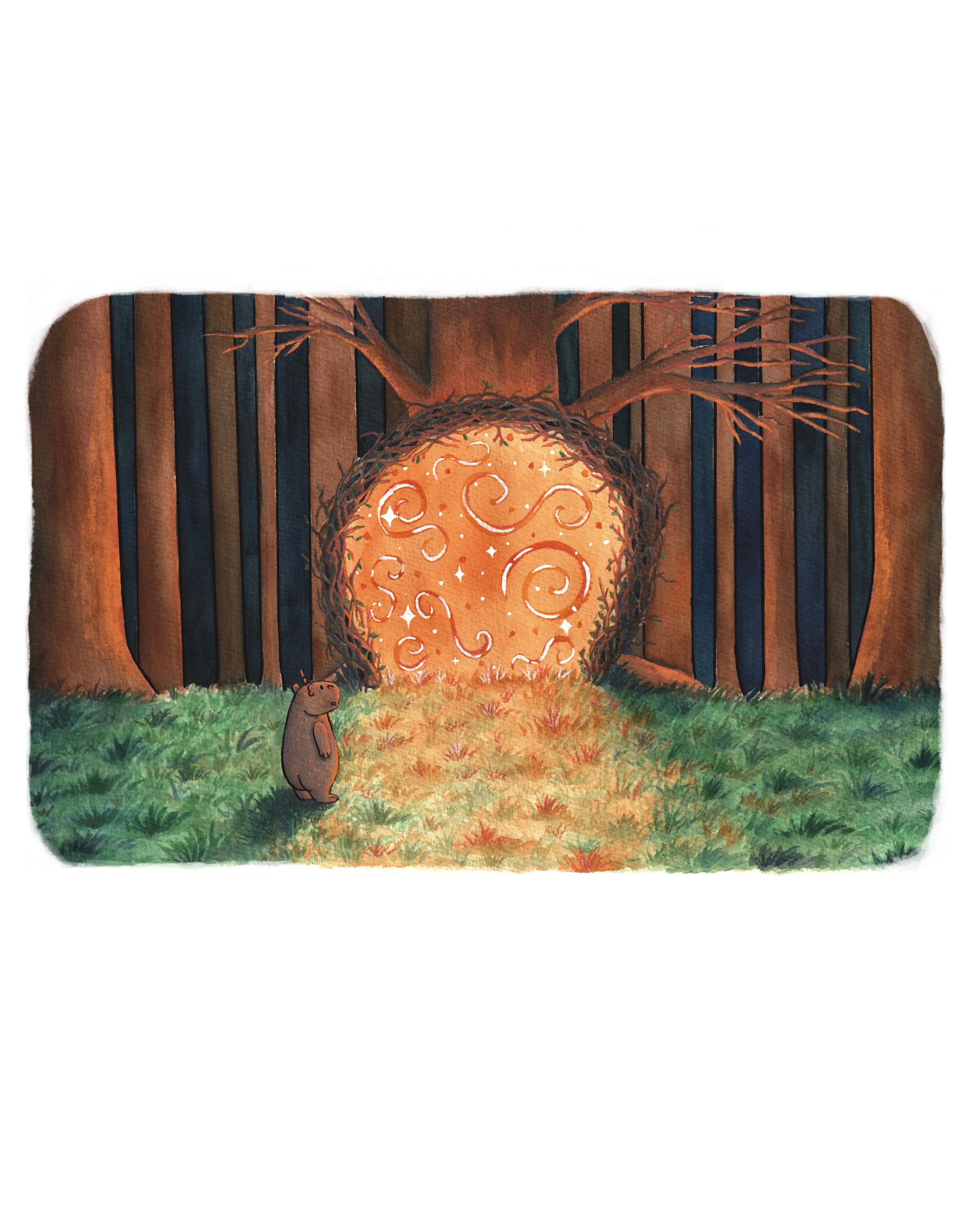
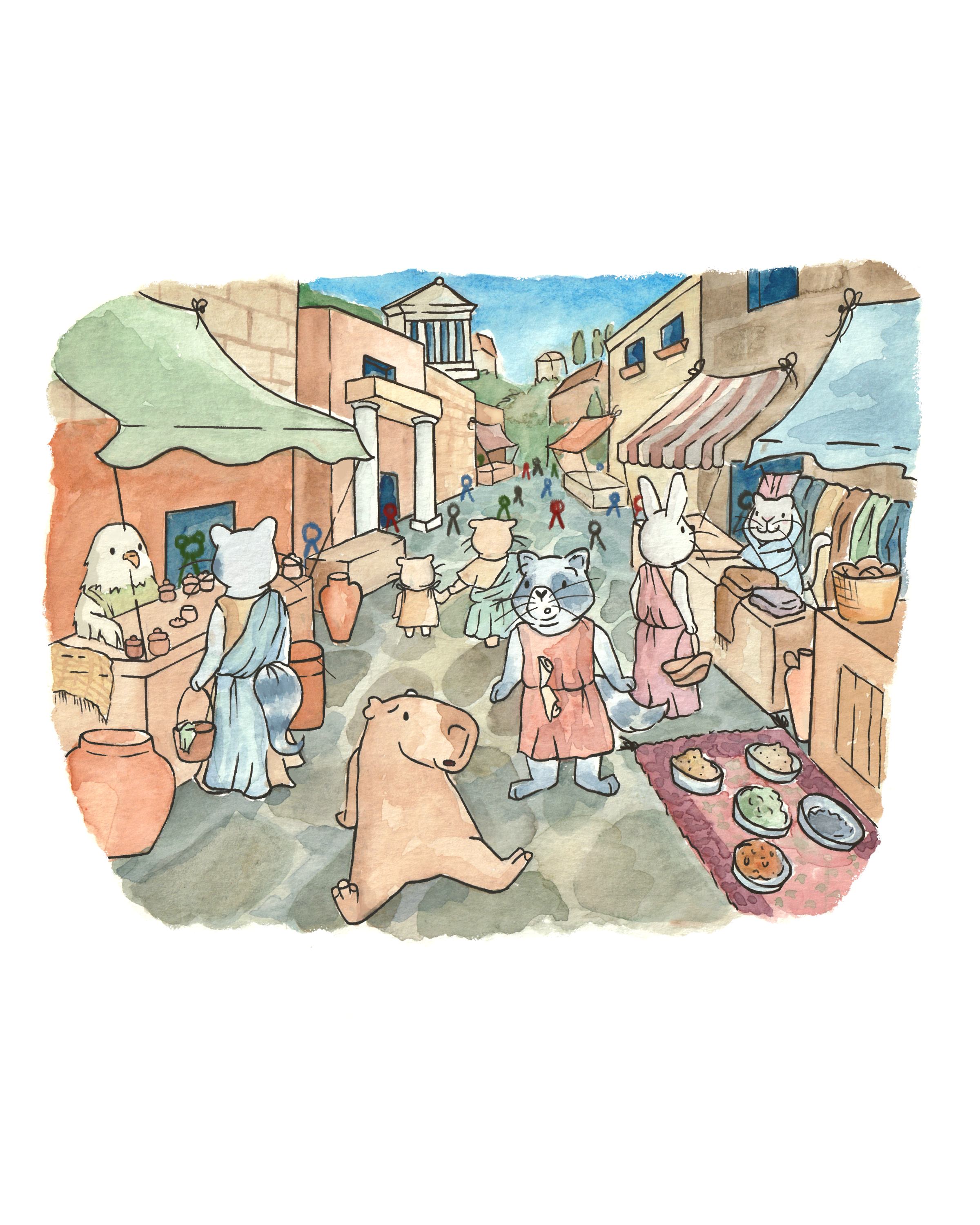
When first conceptualizing what I wanted to do for my first children’s book, I knew it had to be time travel. I am a huge historical fiction nerd, and fan of time travel media such as Doctor Who, Outlander, and of course Magic Treehouse. I also knew it was to have a Capybara as a main character- obviously. I had done a watercolor illustration of a capybara in his cozy pajamas, Goodnight Moon style, who served as an original Craig prototype. I wanted to bring elements of vintage, whimsical animal watercolor art like Frog and Toad or Winnie the Pooh, which was a further stretch away from realism for me, and into true character designing.
Now how or why Craig first ended up in Ancient Rome as opposed to anywhere/time else, is multi-faceted. I have been to the city of Rome twice in my life- once with my family when I was 15, and again when I was 23 and studied abroad in Florence. Rome has an elaborate and extensive history that you can see and feel as you walk around the city- modern graffiti next to ancient ruins, the highest fashion and jewelry stores sitting atop a buried city.
But Craig ends up in the year 125 AD/CE, some may call it the height of the Roman Empire. In college, I took a class with Penelope Davies on Imperial Rome, spanning from Pompey to Caracalla, around 250-300 years from the rise and “fall” of the empire. In writing Craig’s adventures, I referenced material from the class and my knowledge of Rome, as well as Mary Beard’s “SPQR” and “24 hours in Ancient Rome: A Day in the Life of the People who Lived There”, by Phillip Matyszak. Craig is not a scholarly work so I refrain from citing sources, but the for historical part of the “historical fiction”, I tried my best to remain true to the sources we have. Ancient history is a puzzle missing half the pieces- with historians, anthropologists, and scientists working together to create the rest of the pieces from their informed assumptions. We can and will never know what the citizens of the city truly thought and experienced on a daily basis, but we can make educated guesses, which is what I’ve done after synthesizing various books and lectures.
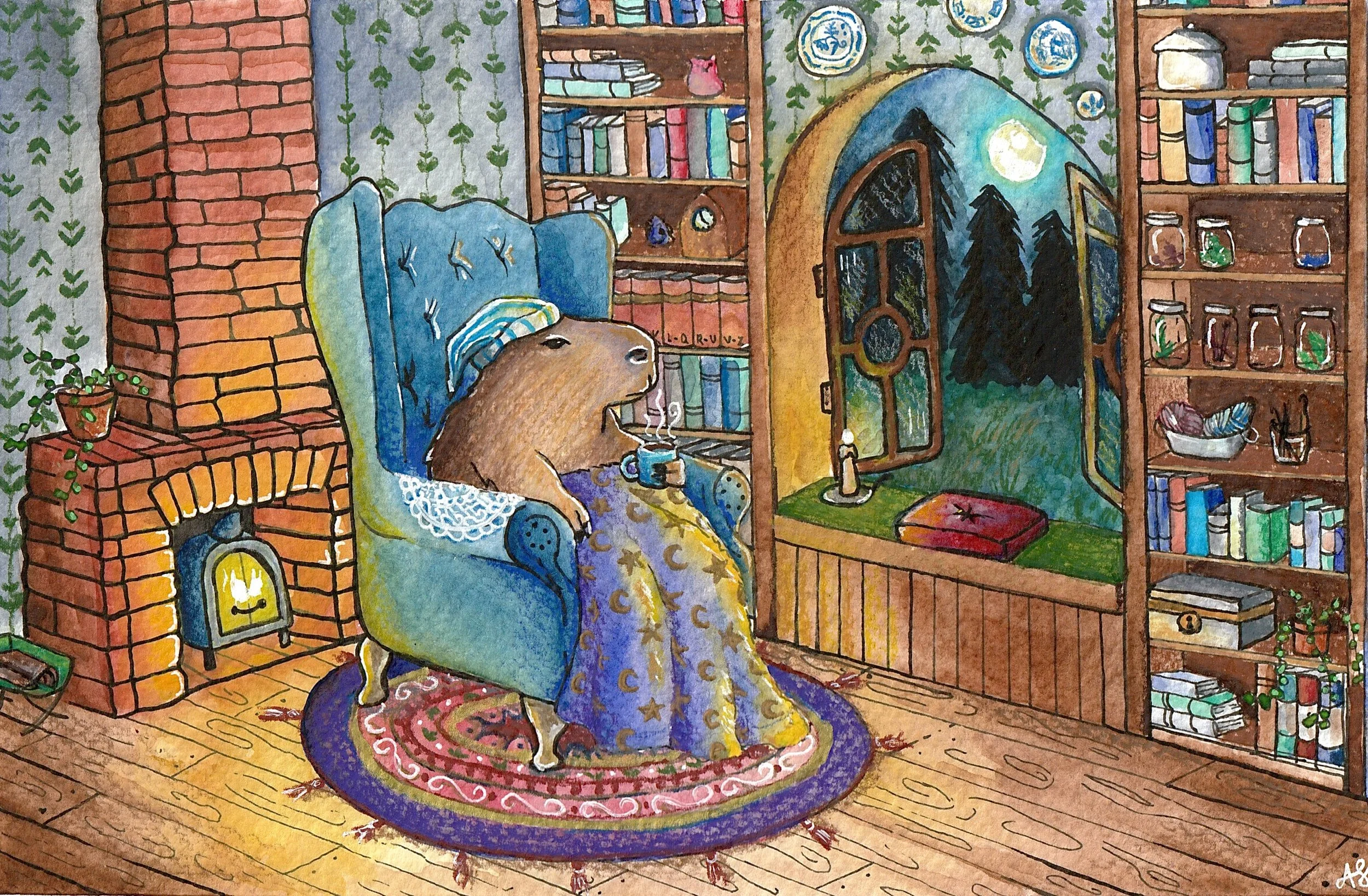
“Goodnight Moon” watercolor, pen and colored pencil, 2025
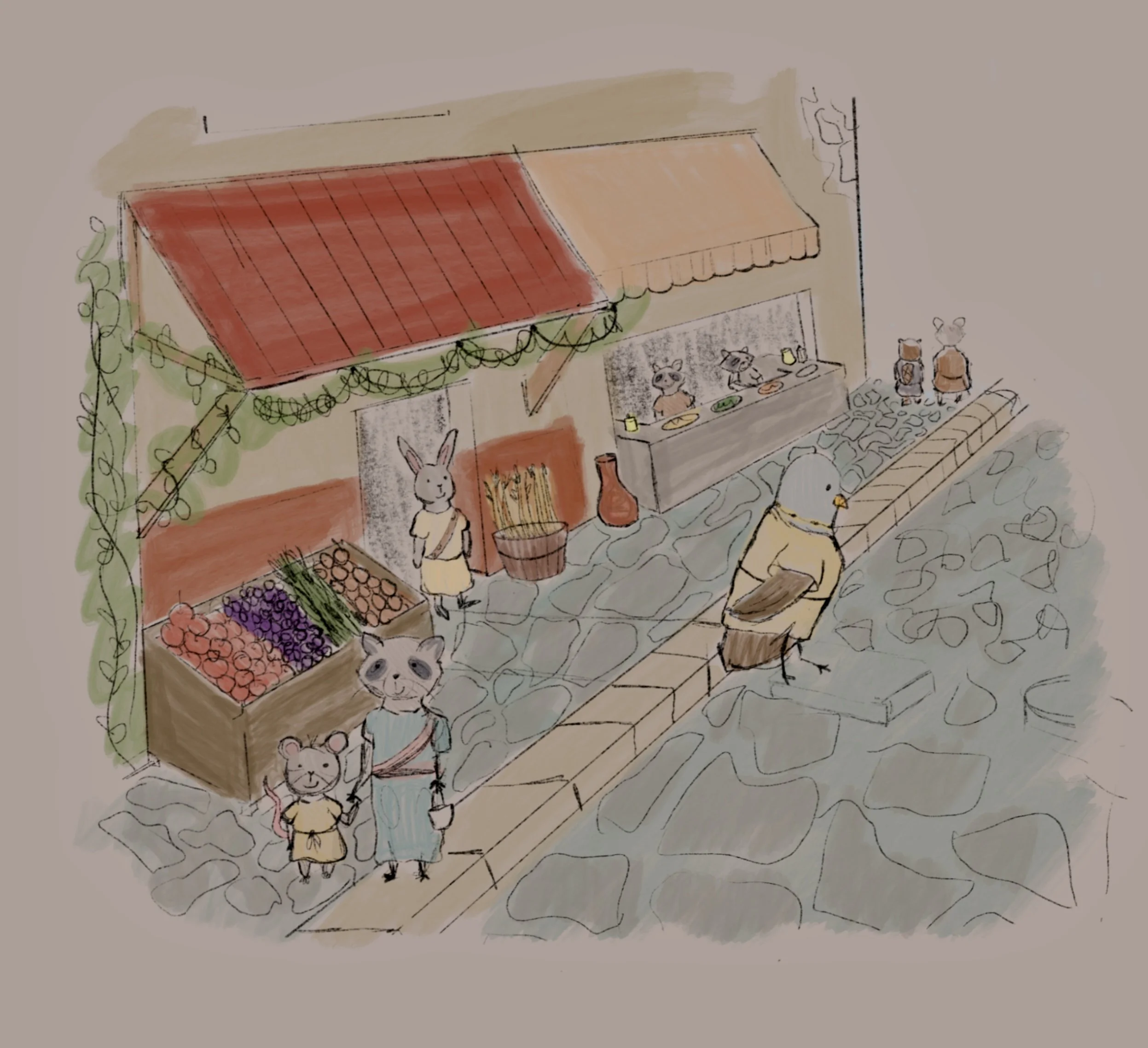
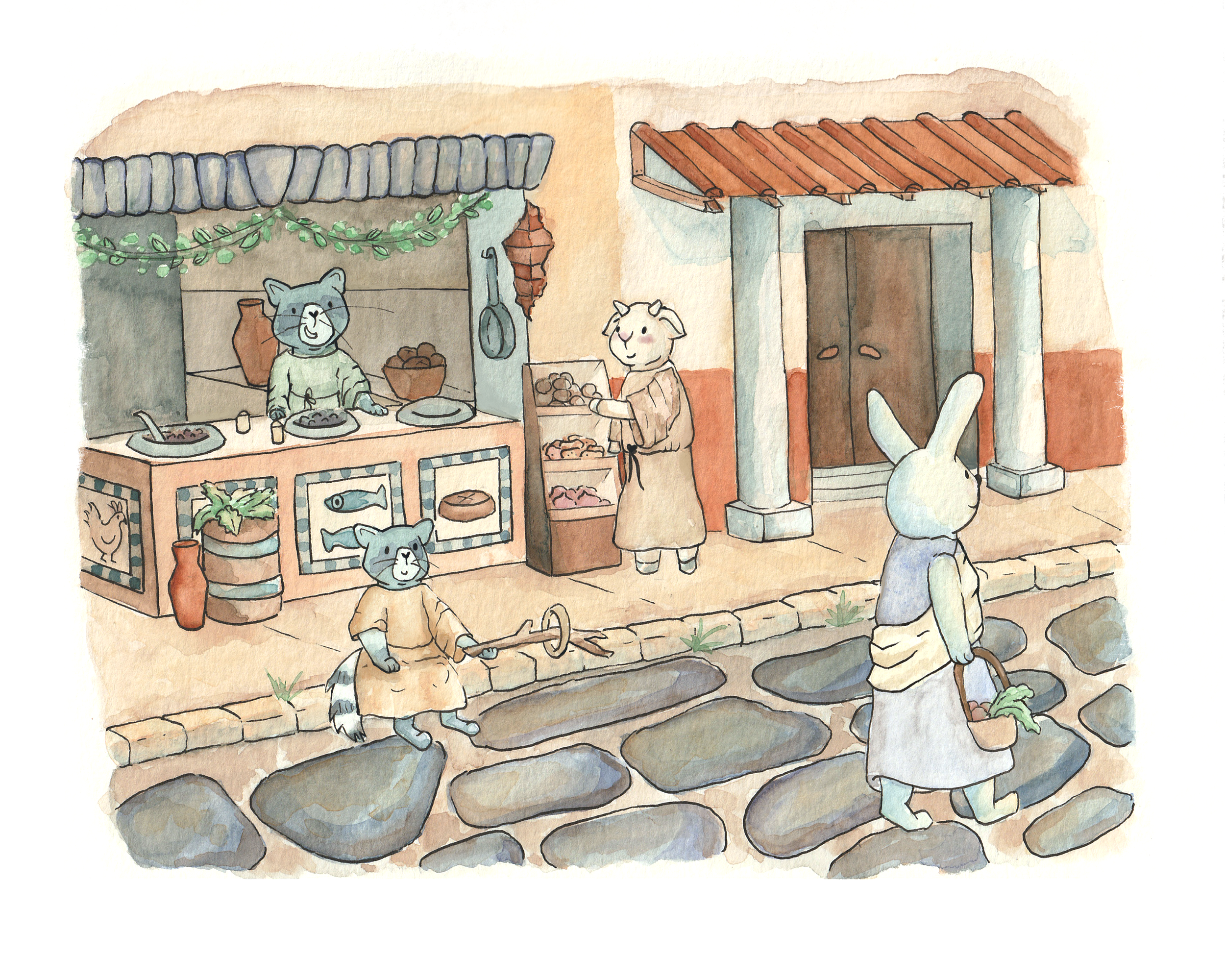
First sketch of market street scene
Final version
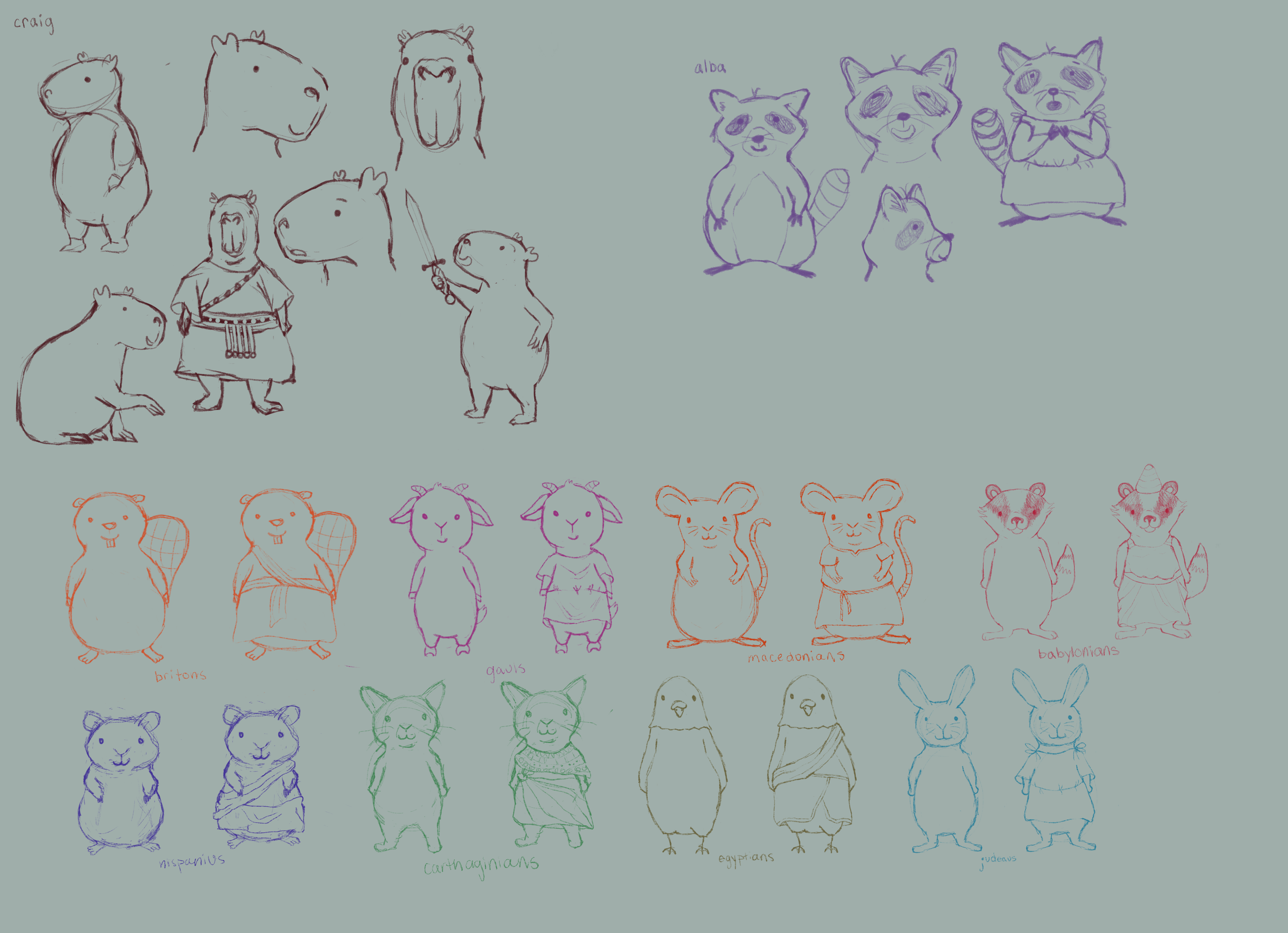
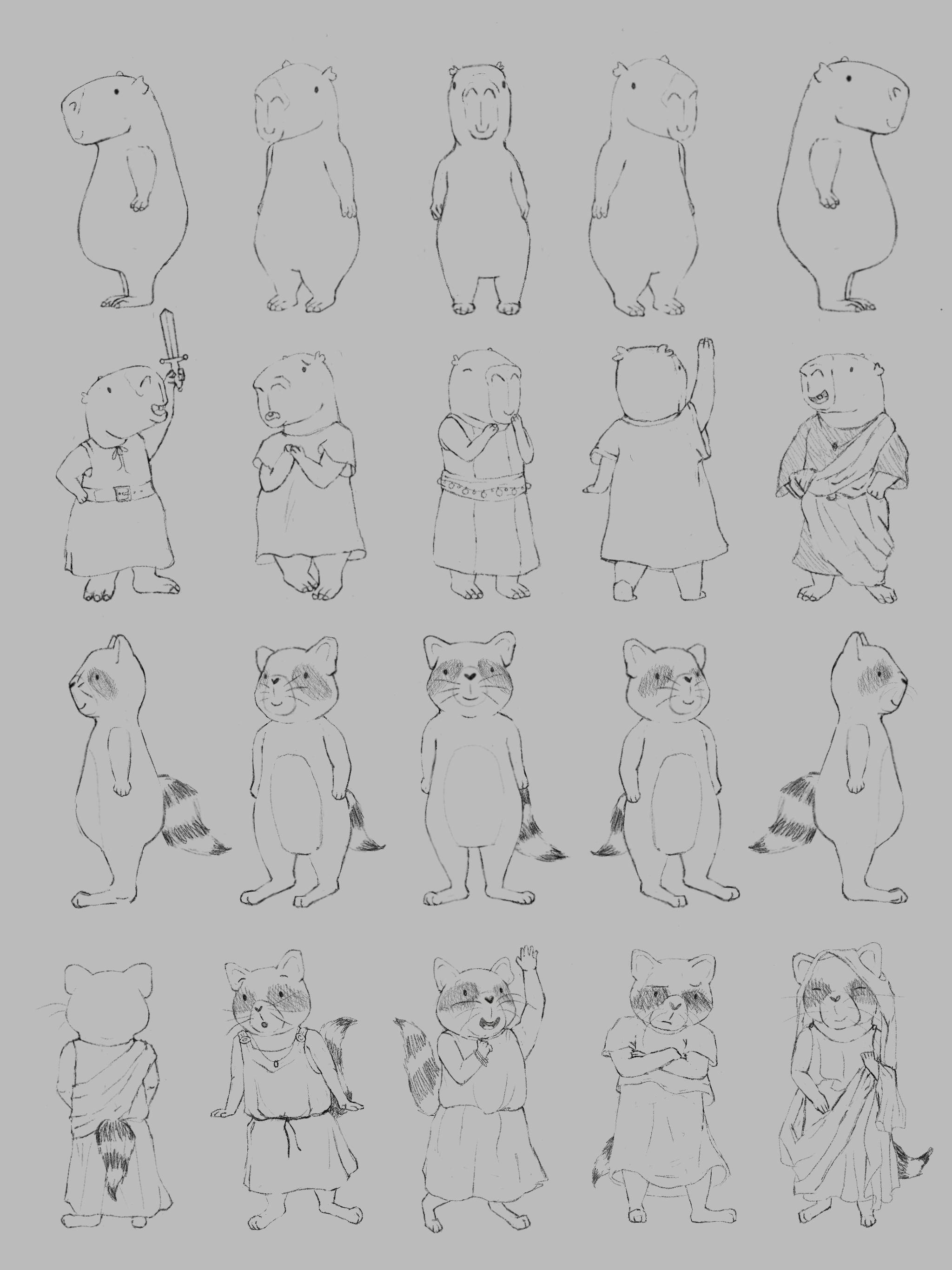
Early 2025 character designs
2026 redesigns
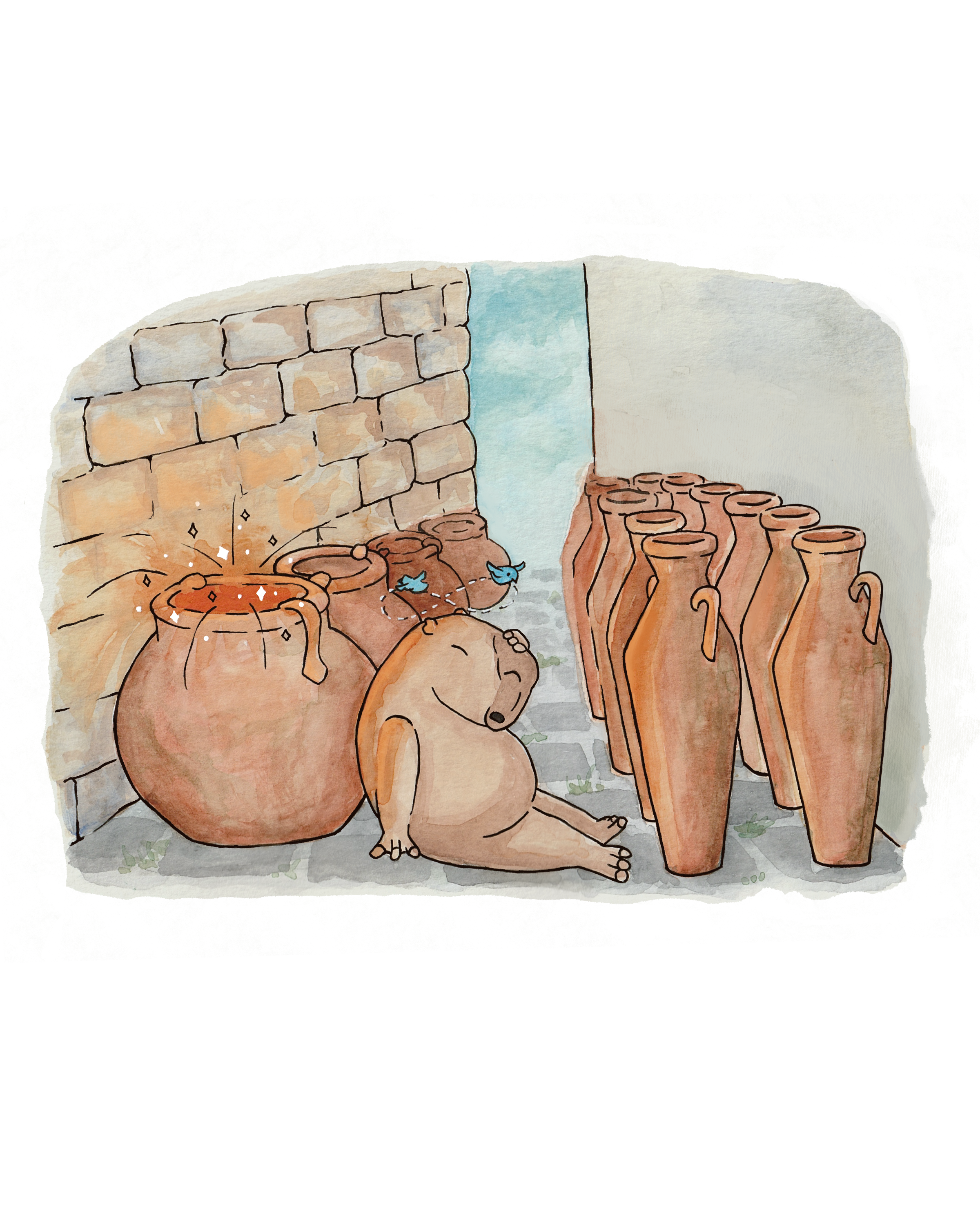
Of course every illustration tells a story, but I had never written a narrative alongside a series of illustrations before: a true picture book. It made sense to me that the illustrations were intertwined with the words, so I wrote and illustrated my story simultaneously. I wrote a shabby rough draft, and sketched alongside it. They were revised and edited alongside each-other many times. Hindsight is of course 20/20 and this was a horribly inefficient way to write a picture book. After getting the basic narrative together, and doing thumbnails, I went through and flushed out over 50 digital sketches- detail, color and all. Yes, Craig the Capybara goes to Ancient Rome was originally over 53 pages long, while still remaining under 800 words. I had double page spreads, with epic scenes- some pages only have a sentence or less. Of course this is unsustainable, as I was still considering what readers would want as well as the industry standards of a 32 page spread, including covers and end pages. I edited, revised and mostly cut many pages from the original layout. Craig’s final form has 24 illustrated pages, not including the map spread and the cover. Many pages were just combined, with 2 mini illustrations inhabiting the same page. All double page spreads were cut, except for the map. Some pages are from sketches that were done in the very first draft, some pages were conceptualized after I had completed almost every other page. I also illustrated the story out of order, trying to randomize my approach and make the end product seem more cohesive.
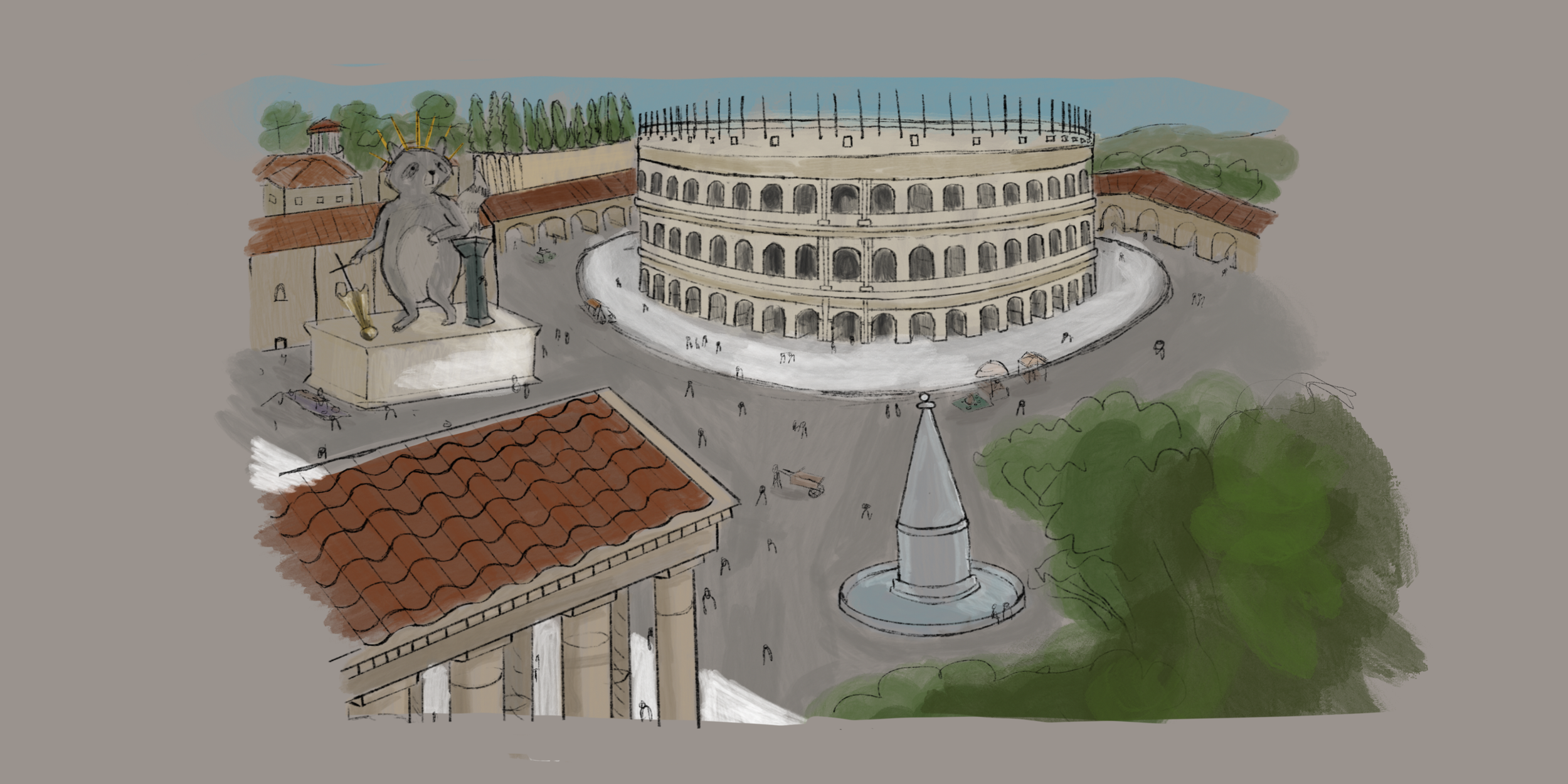
Hadrian’s Rome
Craig is dropped into 125 AD/CE- when the two ruling powers of the globe were China and Rome. Emperor Hadrian was appointed in 117, following Trajan, who amassed so much territory into the empire it reached it’s maximum size consuming swaths of land from modern Iran to Britain. The concept of “citizenship” from Rome at this time was a unique political tool used to unite their territories, rather than granted on the basis of ethnicity like a modern nation state. It was as radical at the time as it is now, that anyone in a Roman controlled province: a freed slave, a conquered population or just an ally of Rome could be granted citizenship, which includes legal rights and protections. It was of course, not a democracy. There were tiered hierarchies to citizenship, and not every citizen was equal under the law. Roman were not trying to create an egalitarian utopia- it was simply an imperial advantage to give people a stake in the empire that just conquered them and constructing a united front against their enemies.
But this concept was interesting to me. Anyone, anywhere across the Mediterranean could in theory be a citizen of the city of Rome without ever having visited, speaking Latin or knowing anything about Roman culture. All provinces were united under the banner of the empire. Egyptians, Macedonians, Carthaginians, Britain’s- they could all be Romans, while still retaining their culture and heritage. This was the inspiration for the plot of Craig’s first venture into the past. Rome was not concerned with diversity, equity or inclusion with their citizenship policy but I thought it was an interesting dilemma that could be brought into a modern context. It would not be until 212 AD/CE that Emperor Caracalla would grant full citizenship to all inhabitants- but in Craig’s adventure into Rome he explores the ideas of unity within a diverse empire. I do not mean to paint Romans as “kind imperialists”, but the truth is they had a unique hands-off “conquering” system, which involved the local cultures maintaining a lot of authority, cultural norms and native languages, making the empire a uniquely diverse yet united body.
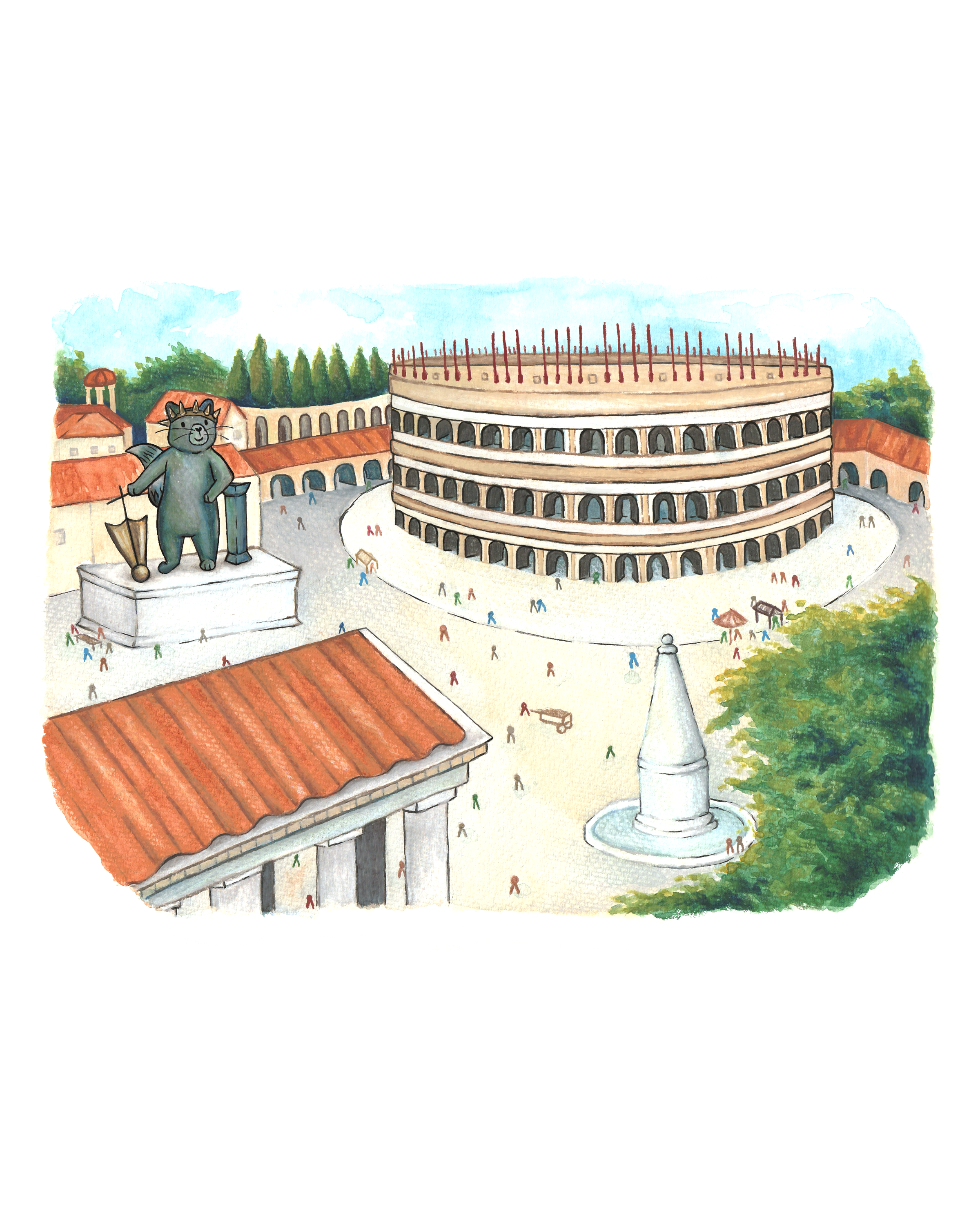
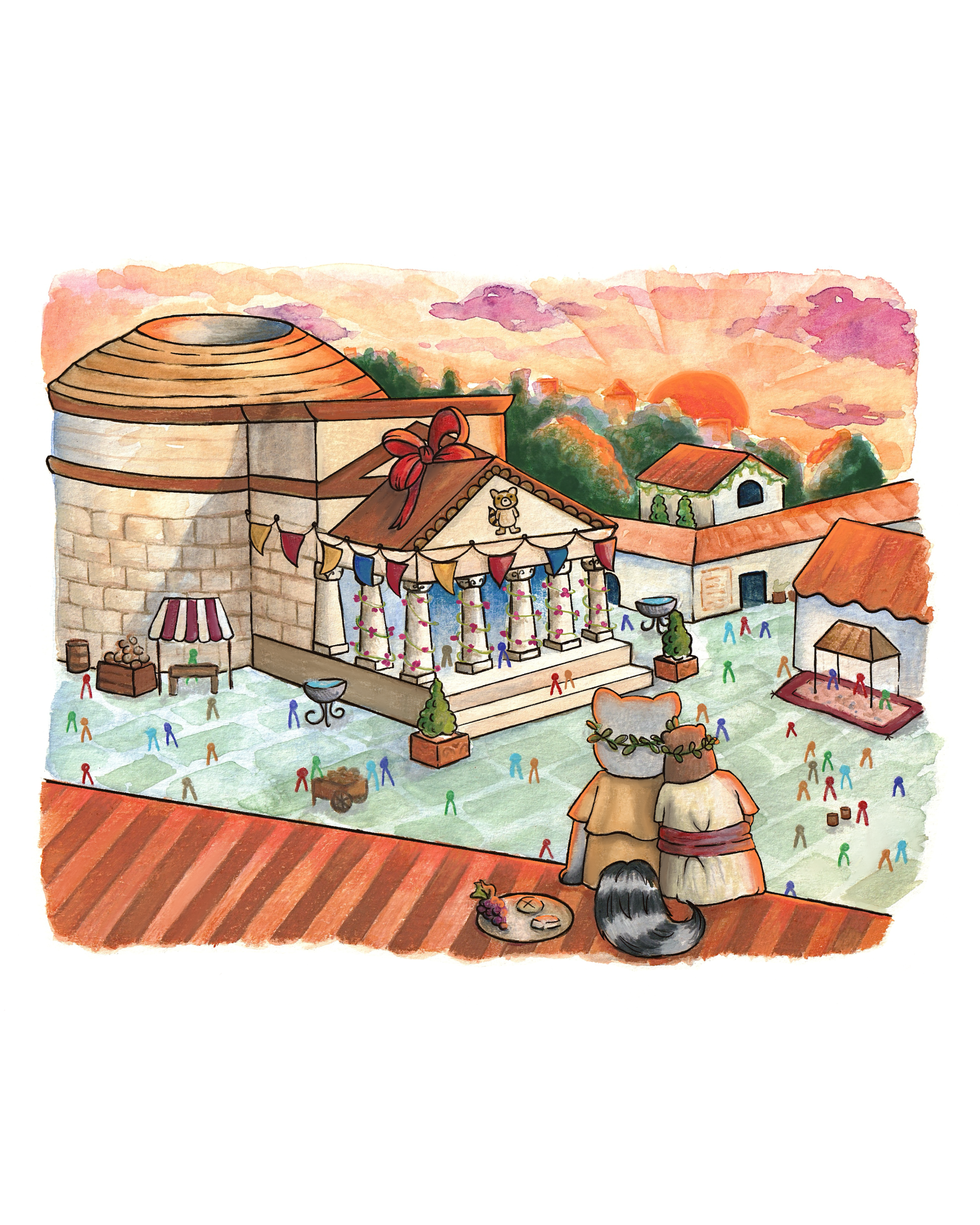
So when Craig pops in, the city and wider empire are reckoning with this imperial identity, after having just completing the reconstruction of the Pantheon. The Pantheon was “reopened” in 125 AD after several fires, with massive restorations and additions, like it’s iconic dome- the largest in the world. The Greek terms “Pan” meaning “All” and “Theos” meaning “Gods”, the Pantheon was a temple to all 12 Greco-Roman deities. I liked the idea of a temple of “All Gods” to be included in the story of a wider united empire, and the opening ceremony and festival that Craig and Alba work to put together is for the Pantheons grand opening in 125 AD. Craig drops into the heart of city and is spotted by a local girl named Alba. Her father is a senator- shown by his Tyrian purple robe, his gorgeous mini-villa and his concerns with appeasing the emperor at all costs.
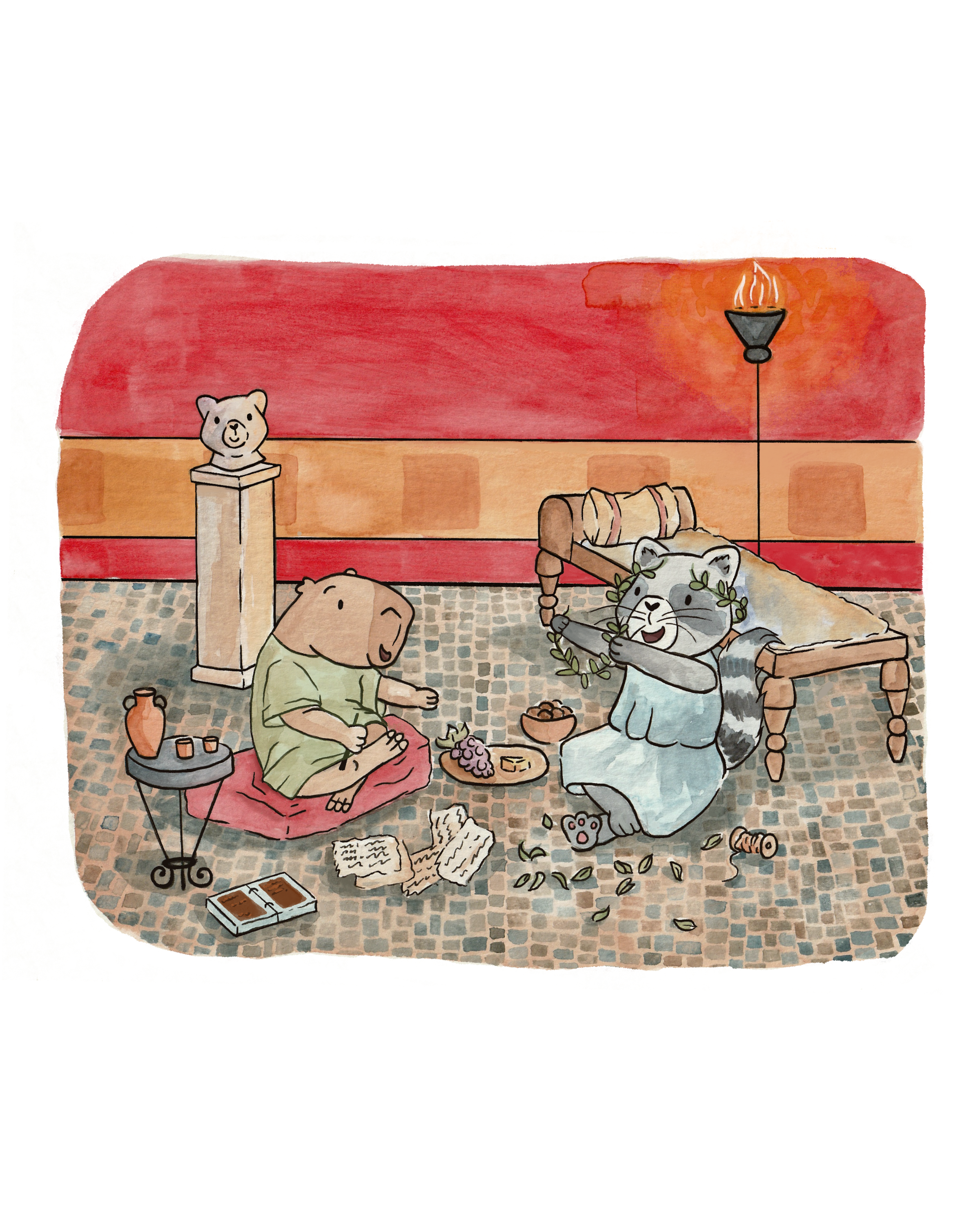
My interests in this story and in history in particular, lies with the average person. Though he is mentioned, Emperor Hadrian does not appear in the story. I wanted to focus on the life of the commoner- going to the market, talking with friends and family, making laurel crowns together. There were unfortunately many scenes that had to be cut that gave a glimpse into Roman life, like the bathhouses, tabernae fast food stands, time period accurate musical instruments, dining parties, the Circus Maximus, children’s toys/games- and so much more. What was day to day life like for the average citizen? Unfortunately it is unlikely the average person in the ancient world left anything behind for us to know about their personal lives. Those privileged enough to be literate and wealthy are the lives we usually find remnants of in the historical record. I wanted to give those people a place in our communal memory, helping us realize those from 2000 years ago were not actually so different than us today.
Original Colosseum double-page spread
Lore
While historical accuracy was important to me in many aspects, it does not force me to compromise on my whimsy. In the process of writing this story, I slipped into worldbuilding the system of magic Craig uses to travel and how and why.
How does the portal work?
It’s magic. The portal appears when it senses Craig is ready for an adventure, and it takes him to a time and place he is needed or could be of service. He is also returned to his original time and location when he steps back into the portal.
Does Craig speak Latin?
No, Craig is speaking English and he is hearing the Romans speak English back to him. I decided on Tardis rules here: the portal has a forcefield that converts Latin to English for Craig and vice-versa for Alba. The same works for reading and writing as well. It’s magic.
Why is he naked?
Craig is naked because he lives in a hut in the middle of the woods. He is eventually given tunics and robes by Alba and her family during his stay there and even takes one back home. If you or Craig really popped up in 125 AD Rome, butt-naked, you probably would not be subject to legal punishment or harassment like today, but it would be a little unusual. Inside a bathhouse- it would have been completely normal, but walking along the streets Craig might have gotten a few gawks for looking destitute.
If you have any other questions about Craig or Rome, find me on my social media or shoot me an email! I love to nerd out, and answer any and all questions.
Join the Capy Club for monthly emails about Craig’s adventures as well as my other works and projects!
Thanks,
Alaina